Cincinnati Chili: A Religion with a Numbering System
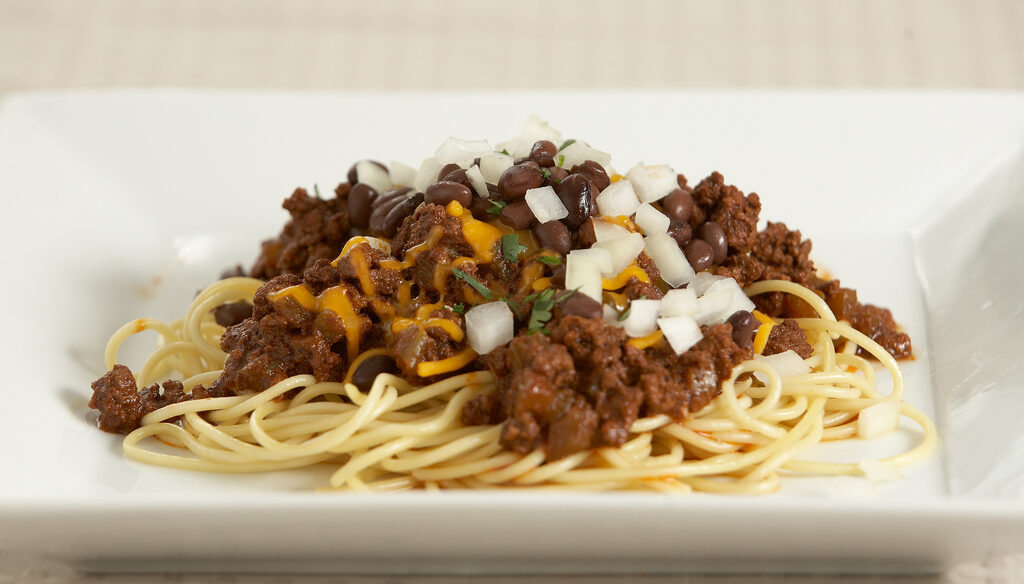
Let's get this out of the way: Cincinnati chili is not chili. Not in the way Texas, New Mexico, or literally any other state understands the word. It is a cinnamon-and-chocolate-spiced meat sauce served over spaghetti, under a mountain of finely shredded cheddar cheese. It bears more resemblance to a Greek pasta dish than to anything you'd find at a chili cook-off. And Cincinnati will fight you if you call it anything other than chili.
The dish was created by Greek immigrant Nicholas Lambrinidis, who opened Skyline Chili in 1949. The spice blend — cinnamon, chocolate, allspice, cloves, cumin — reflects the Aegean flavor profile Lambrinidis grew up with. But Lambrinidis wasn't the first. Empress Chili, opened by Macedonian immigrants in 1922, pioneered the concept. Skyline perfected it.
You order Cincinnati chili by number, and the numbering system is non-negotiable:
- Two-Way: Chili over spaghetti
- Three-Way: Add shredded cheddar cheese (piled absurdly, irresponsibly high)
- Four-Way: Add diced onions
- Five-Way: Add kidney beans
The major rivalry is between Skyline Chili and Gold Star Chili. Marriages have been tested by this division. But the true connoisseurs — the ones who've eaten chili three-ways at 2 AM after a Bengals game — often prefer Camp Washington Chili, a cramped, 24-hour diner on Colerain Avenue that was honored by the James Beard Foundation as an American Regional Classic. If you want to understand Cincinnati, start here. Order a three-way, add hot sauce and oyster crackers, and do not make eye contact with anyone from Texas.
Goetta: The Breakfast Meat Made of Oats
 GLIER'S • CINCINNATI BREAKFAST
If Cincinnati chili is Ohio's most famous dish, goetta is its most private one. You can find chili at Skyline locations across the Midwest. Goetta barely exists outside the I-275 loop.
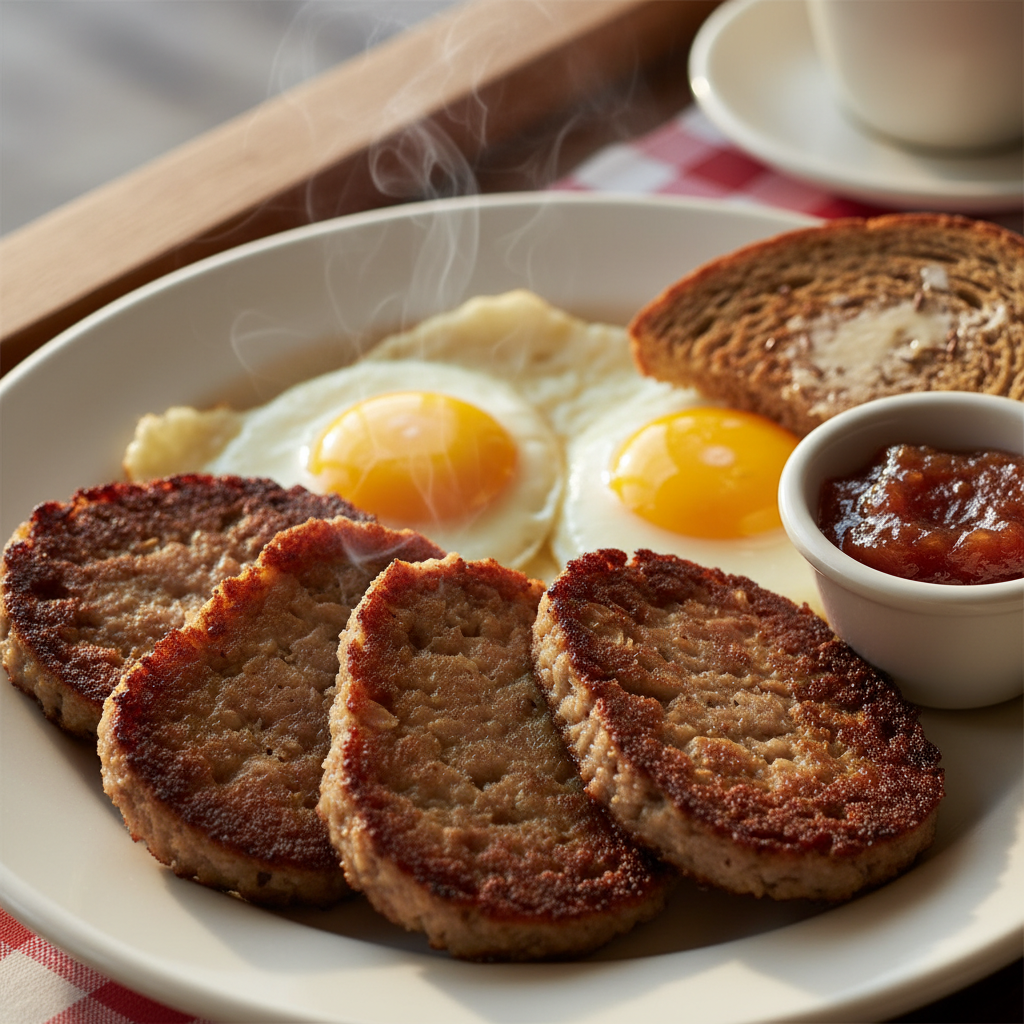
Goetta (pronounced "GET-uh") is a German heritage breakfast meat made from ground pork, beef, and steel-cut pin-head oats, seasoned with onions and spices, formed into a loaf, sliced, and fried until the edges are crisp and golden. It was brought to Cincinnati by German immigrants in the 19th century as a way to stretch expensive meat with cheap, filling oats.
About one million pounds of goetta are consumed annually in the Cincinnati area. The primary commercial producer is Glier's, based in Covington, Kentucky (just across the river — Cincinnati claims it anyway). Goetta has its own festival: GoettaFest, held annually in Newport, features goetta in nachos, empanadas, shepherd's pie, mac and cheese, brownies, and even cannolis. Every form factor has been attempted. Every form factor has been endorsed.
If you order breakfast in Cincinnati and don't see goetta on the menu, you're at the wrong restaurant. If you order it and don't like it, you have to leave the city. Those are the rules.
The Polish Boy
Cleveland's Perfect Sandwich
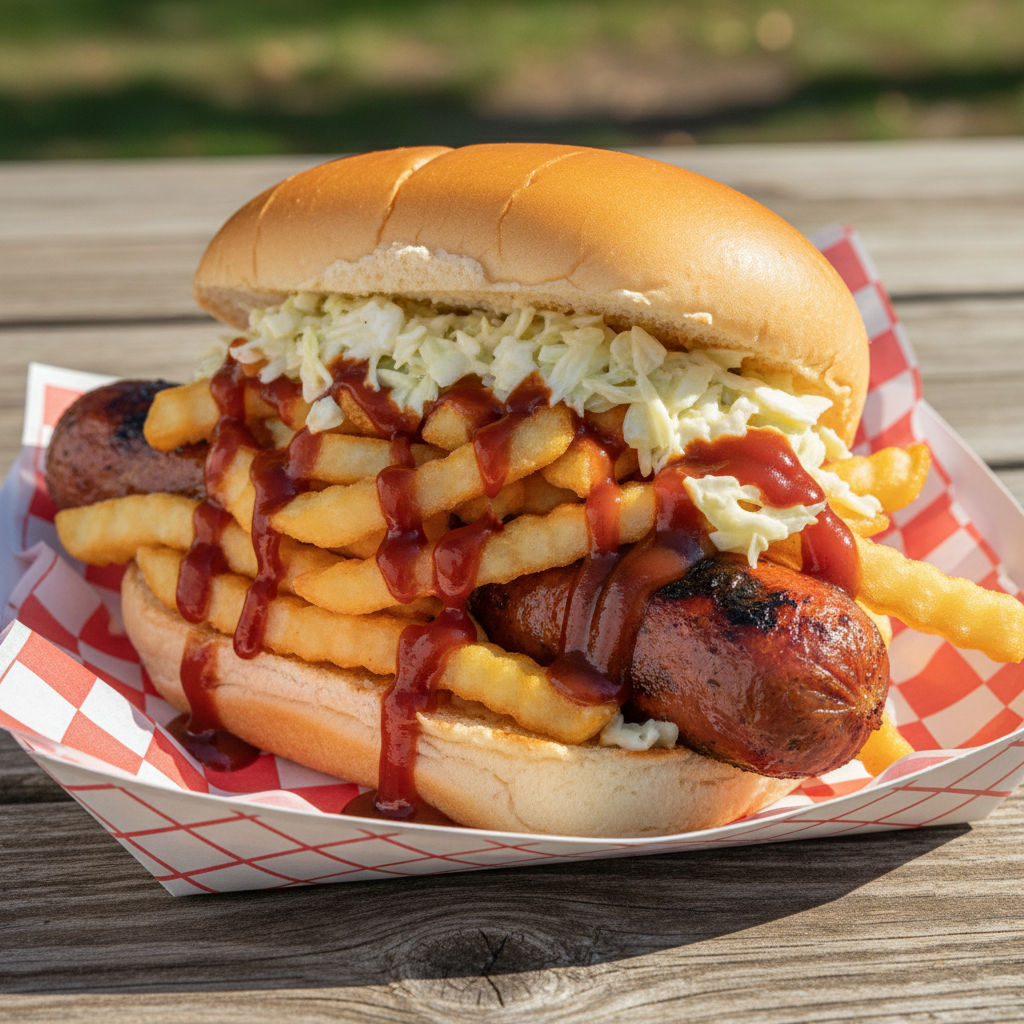 CLEVELAND EAST SIDE • EST. 1940s
The Polish Boy is Cleveland's contribution to the sandwich canon, and it is, by any rational measure, too much. A kielbasa sausage, topped with coleslaw, topped with French fries, topped with barbecue sauce, all stuffed into a bun. It should not work. It is structurally unsound. It is a violation of sandwich physics. And it is one of the best sandwiches in America.
The Polish Boy was created in the 1940s by Virgil Whitmore, and it emerged from Cleveland's African American community on the East Side. Despite its name, it has no known connection to Poland or Polish cuisine — the "Polish" likely refers to the kielbasa. Celebrity chef Michael Symon, a Cleveland native, has championed the Polish Boy nationally and it has slowly gained recognition beyond Northeast Ohio.
Cleveland also gave us the first rock and roll concert and twelve square miles of salt mines, but the Polish Boy might be its greatest contribution. The key to a great Polish Boy is the balance: the snap of the kielbasa, the cool crunch of the coleslaw, the salty warmth of the fries, and the sweet tang of the sauce. Every element serves a purpose. Order one at Seti's, Hot Sauce Williams, or any of the small shops on the East Side that have been making them for decades.
Ohio's Secret Pizza Wars
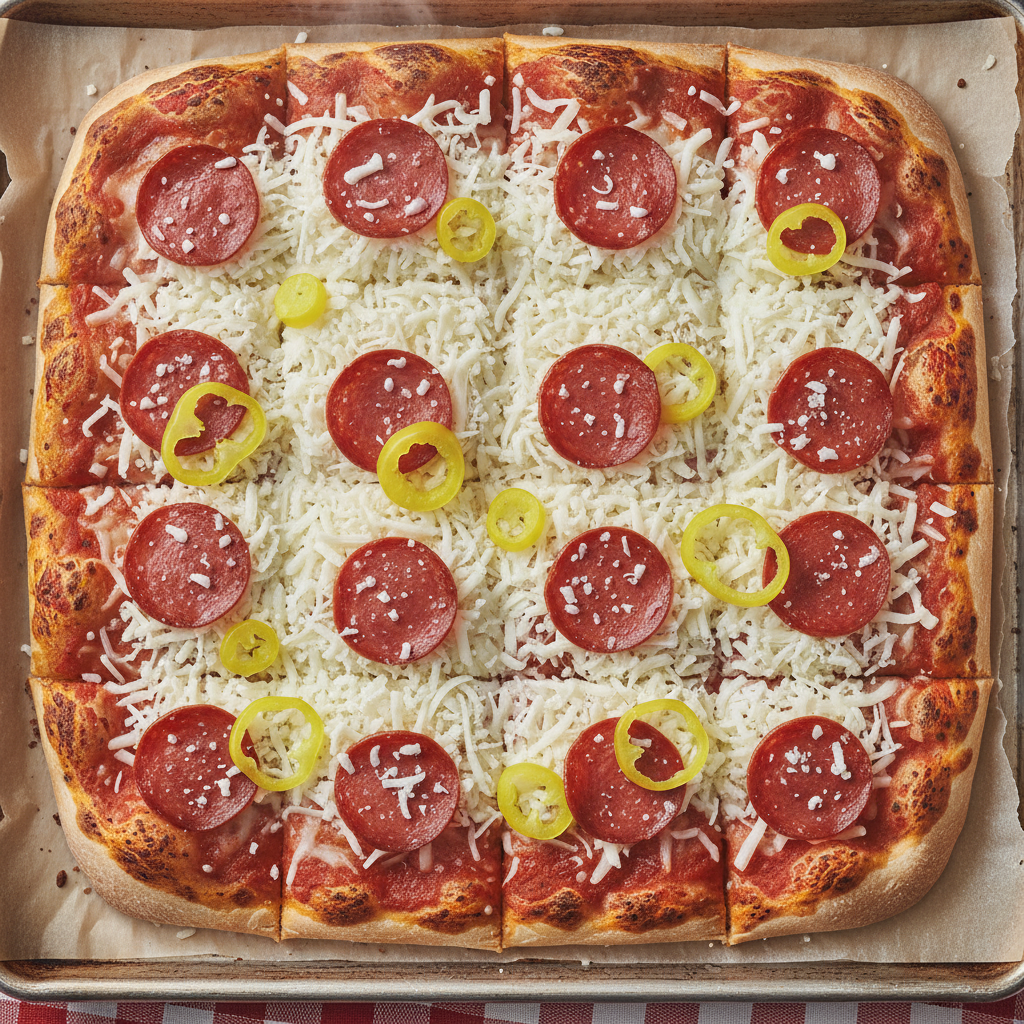 OHIO VALLEY • CHEESE GOES ON COLD
Ohio has at least four distinct regional pizza styles, and the rest of the country doesn't know any of them exist. New York and Chicago get all the attention. Ohio quietly built an entire parallel pizza universe.
Columbus-Style Pizza
Ultra-thin crust with cheese and sauce extending all the way to the edge — no outer crust border whatsoever. Covered edge-to-edge with pepperoni and cut into tiny squares, not slices. Donatos is the commercial standard-bearer, but dozens of local shops have their own versions. It is designed to be eaten with one hand while doing literally anything else.
Ohio Valley Pizza (Steubenville)
This is the one that breaks people's brains. The pizza is baked in a square pan with sauce and dough. Then — after it comes out of the oven — cold shredded provolone, cold pepperoni, and cold banana peppers are placed on top, unheated. The cheese doesn't melt. It sits there, slightly softened by the residual heat, creating a contrast between the hot crust and the cool toppings that is genuinely unlike any other pizza experience in America. The rest of the country doesn't know this style exists. Steubenville knows, and Steubenville is fine with that.
Cleveland-Style Pizza
Soft, semi-thick, bread-like crust with crimped edges. Provolone cheese (sometimes blended with mozzarella). Toppings spread to the edge. Think of it as the anti-New York: thick where New York is thin, provolone where New York is mozzarella, substantial where New York is foldable.
Barberton Chicken (Bonus)
Not pizza, but deserving of mention: Barberton chicken is Serbian-American fried chicken originating from Barberton, Ohio. Deep-fried in lard, served with French fries, vinegar-based coleslaw, and Barberton hot sauce — a silky, jammy stewed tomato-and-pepper condiment unlike any hot sauce you've encountered. Rated among the best fried chicken in the country by multiple national publications.
City Chicken Contains Zero Chicken
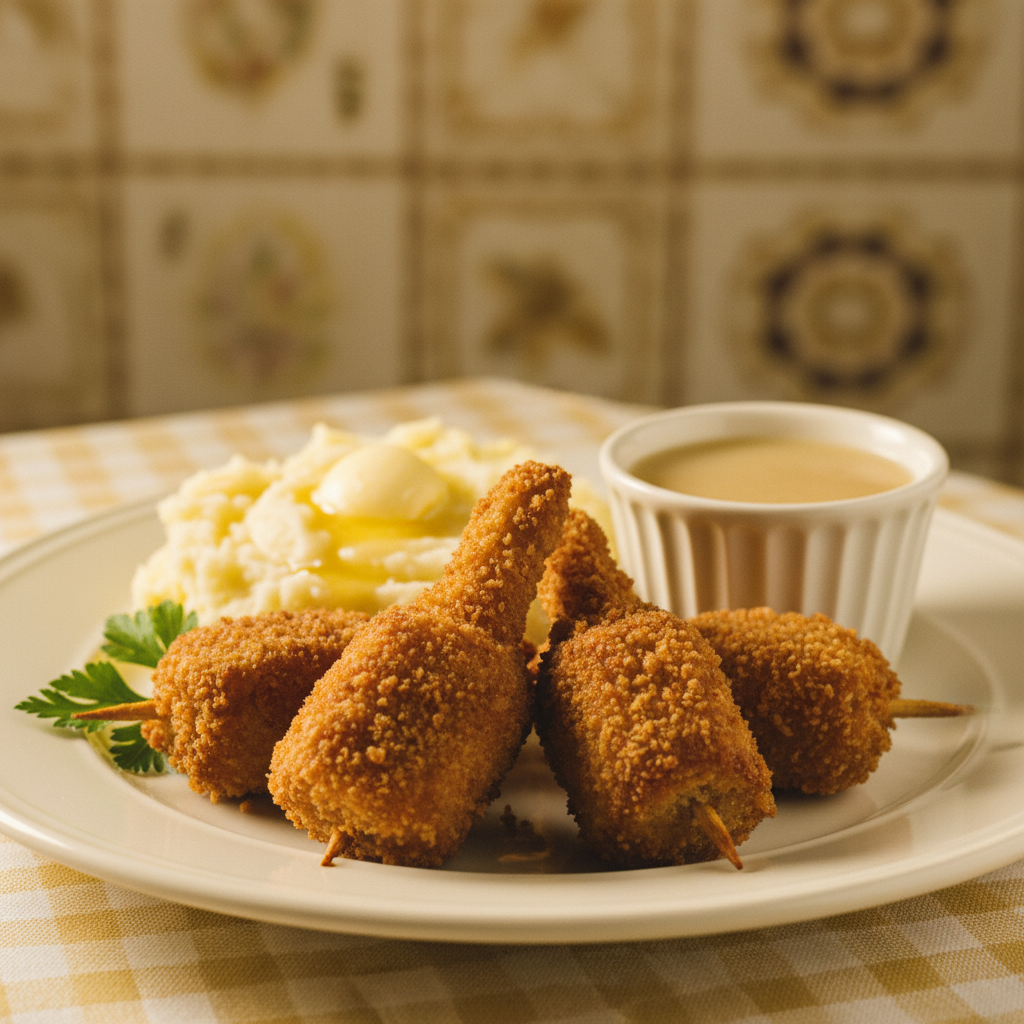 DEPRESSION-ERA WORKAROUND
During the Great Depression, chicken was expensive. Pork was cheap. Polish and Ukrainian communities in Ohio's industrial cities solved this problem with characteristic pragmatism: they cubed pork, threaded it onto wooden skewers to resemble drumsticks, breaded and fried it, and called it "City Chicken."
The name is the lie. The taste is the truth. City Chicken remains a comfort food staple in Cleveland, Youngstown, and Pittsburgh, and it appears at church suppers, family reunions, and the kind of neighborhood restaurants that have been in the same family for three generations.
Tony Packo's and the Celebrity Hot Dog Buns
Toledo, Ohio
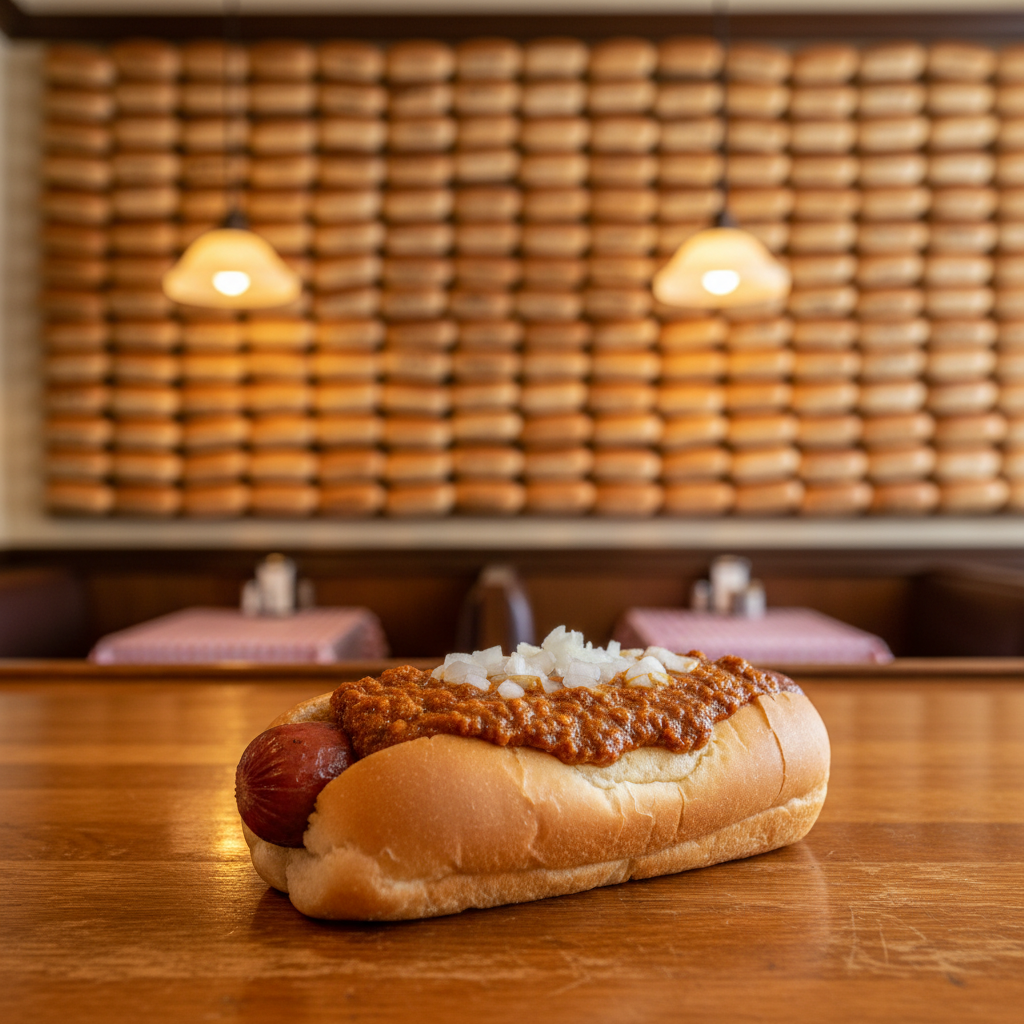 FRONT STREET • TOLEDO
Tony Packo's was built on a Hungarian Kolbasz sausage cut in half to sell for five cents during the Depression. Tony invented the "Hungarian hot dog," a thing that did not exist before him. The restaurant on Front Street became a Toledo institution.
Then Jamie Farr happened. The Toledo-born actor, famous for playing Corporal Klinger on M*A*S*H, mentioned Tony Packo's in six episodes of the show, starting in 1976: "If you're ever in Toledo, Ohio, on the Hungarian side of town, Tony Packo's got the greatest Hungarian hot dogs." The show aired to 100 million viewers. Tony Packo's went from local to legendary overnight.
The celebrity-signed hot dog bun tradition started in 1972 when Burt Reynolds visited and signed a bun. Hundreds of signed buns now line the walls — presidents, athletes, actors, musicians — each one shellacked and preserved. It is one of the strangest and most wonderful collections in American dining.
The Rest of Ohio's Edible Empire
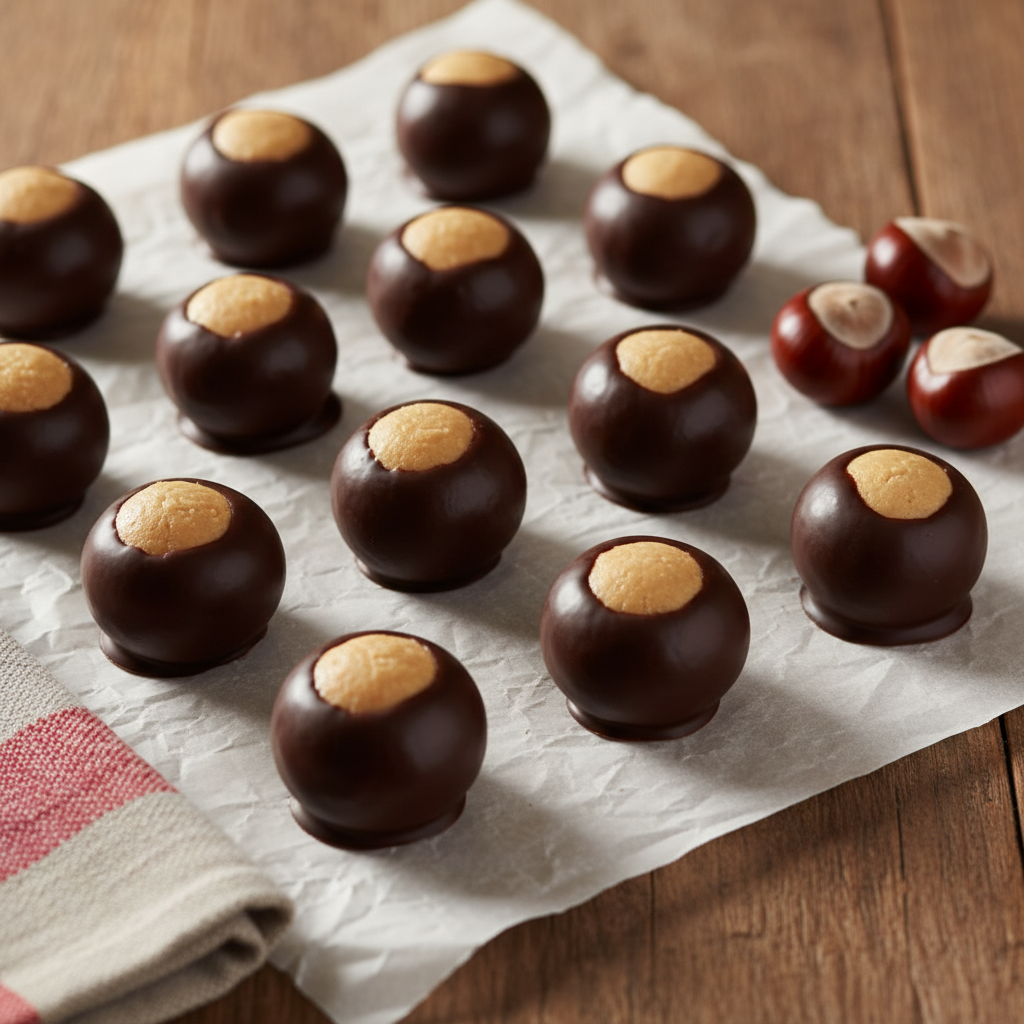 BUCKEYE STATE • DECEMBER KITCHENS
- Buckeye Candy: Peanut butter balls dipped in chocolate with a circle left exposed to resemble the (mildly poisonous) state nut. Every Ohio kitchen becomes a factory in December. Families argue about the peanut butter-to-chocolate ratio with the intensity of constitutional scholars.
- Sauerkraut Balls (Akron): Breaded and fried sauerkraut balls — German or Polish in origin, now a bar snack staple across the state.
- Fried Bologna Sandwiches: Thick-cut, fried until the edges curl, served on white bread with yellow mustard. The G&R Tavern in Waldo is legendary.
- Cleveland Cassata Cake: Italian sponge cake layered with custard, fresh strawberries, and whipped cream. Every Cleveland bakery has a version. Every Cleveland family has an opinion.
- Amish Noodles over Mashed Potatoes: Hand-rolled thick noodles in golden broth poured over a mound of mashed potatoes. Carbs on carbs. Holmes County comfort food at its most unapologetic.
- Swensons Galley Boy (Akron): A double cheeseburger with two special sauces from a drive-in chain founded in 1934. You flash your lights and they come to your car. The sauce recipe is classified.
- Stadium Mustard: Cleveland's beloved brown mustard, born in the 1920s. It has been to space on the Space Shuttle.
- Life Savers: Invented in Garrettsville by Clarence Crane in 1912 because his chocolate kept melting. He spotted a pill-making machine and made ring-shaped mints. He sold the formula for $2,900.
- Sweetest Day: Created in 1921 by a committee of Cleveland candy makers. Ohio's second Valentine's Day. Most of America ignores it. Ohio keeps it alive.
Food Brands You Didn't Know Were Ohioan
Graeter's deserves special mention: founded in 1870, they still use the French pot method, producing ice cream with only 20-25% air versus the industry standard of 50%. This makes it denser, richer, and — Graeter's devotees will tell you — worth the price.