Superman Was Born in a Cleveland Bedroom
Glenville, Cleveland • 10622 Kimberly Avenue
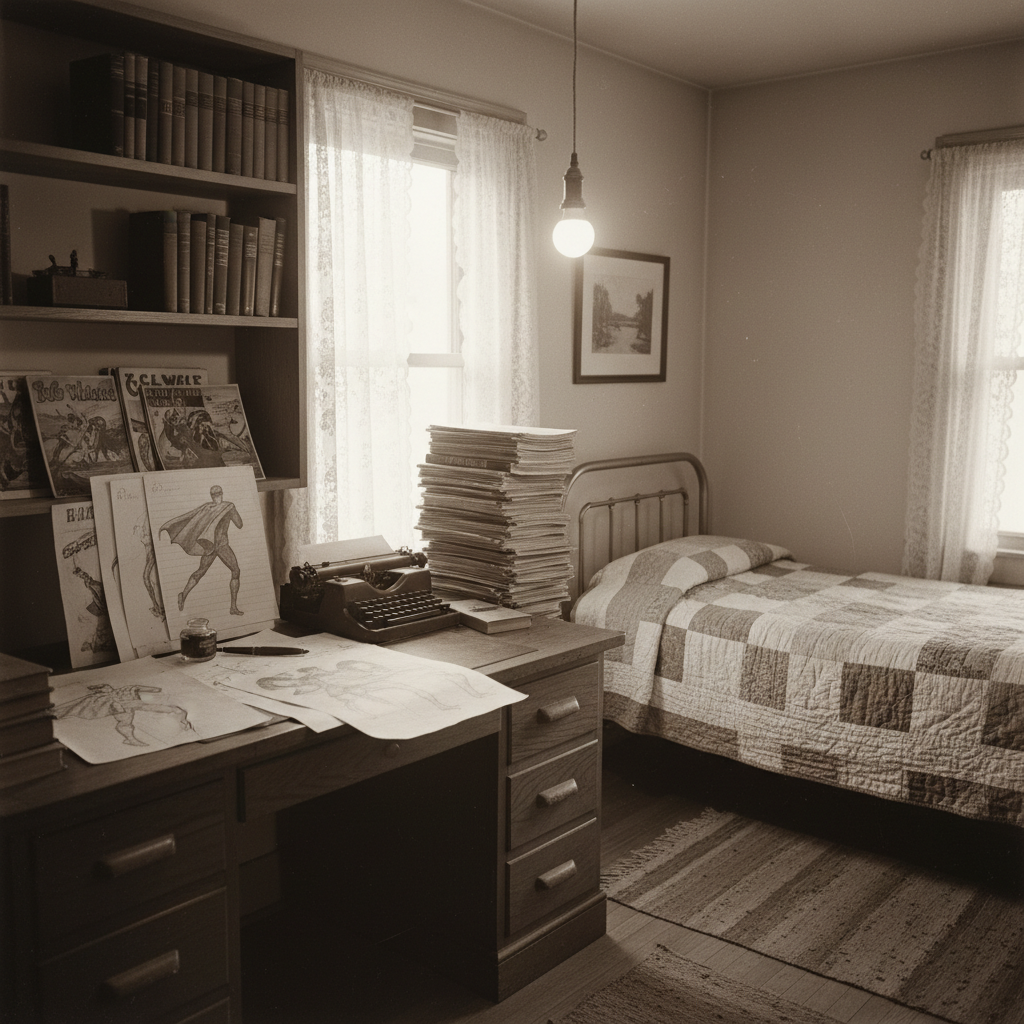 10622 KIMBERLY AVE • 1932
In 1932, in Cleveland's Glenville neighborhood, a Jewish teenager named Jerry Siegel lay awake at night and conceived an idea: an alien from a dying world, sent to Earth as an infant, who grows up to become the most powerful being on the planet. He draws his power not from anger or vengeance but from a fundamental belief in justice. He fights for "truth, justice, and the American way." He is, to use a word that didn't exist before Siegel invented it, a superhero.
Siegel and his friend, artist Joe Shuster, were both sons of Lithuanian Jewish immigrants who had escaped the pogroms of Eastern Europe. They were poor. They were bookish. They were exactly the kind of kids who needed to believe that an outsider with a secret identity could save the world.
In 1938, they sold the first Superman story to Action Comics for $130 for 13 pages — roughly $10 a page. They signed away all rights. Action Comics #1 is now worth millions. The character they created became the foundation of a multi-billion-dollar industry and the template for every comic book superhero that followed.
Ohio now issues official Superman license plates — the only state to do so. The Siegel house at 10622 Kimberly Avenue has been restored with funds raised by novelist Brad Meltzer and fans worldwide. A marker on the house reads: "On this site, a boy from Cleveland dreamed of a hero."
Ohio's comics pedigree extends far beyond Superman. Richard Outcault of Lancaster created "The Yellow Kid" (1895), generally considered the first commercially successful comic strip. Bill Watterson of Chagrin Falls created Calvin and Hobbes. Harvey Pekar, a Cleveland Heights VA file clerk, wrote American Splendor. Jeff Smith of Columbus created Bone. The Billy Ireland Cartoon Library and Museum at Ohio State University is the world's largest academic research facility for cartoon and comic art, housing 450,000 original cartoons and 2.5 million comic strip clippings. The state that invented the superhero also built the world's greatest archive of the medium.
Ohio Invented Punk Rock
Cleveland & Akron • 1970s
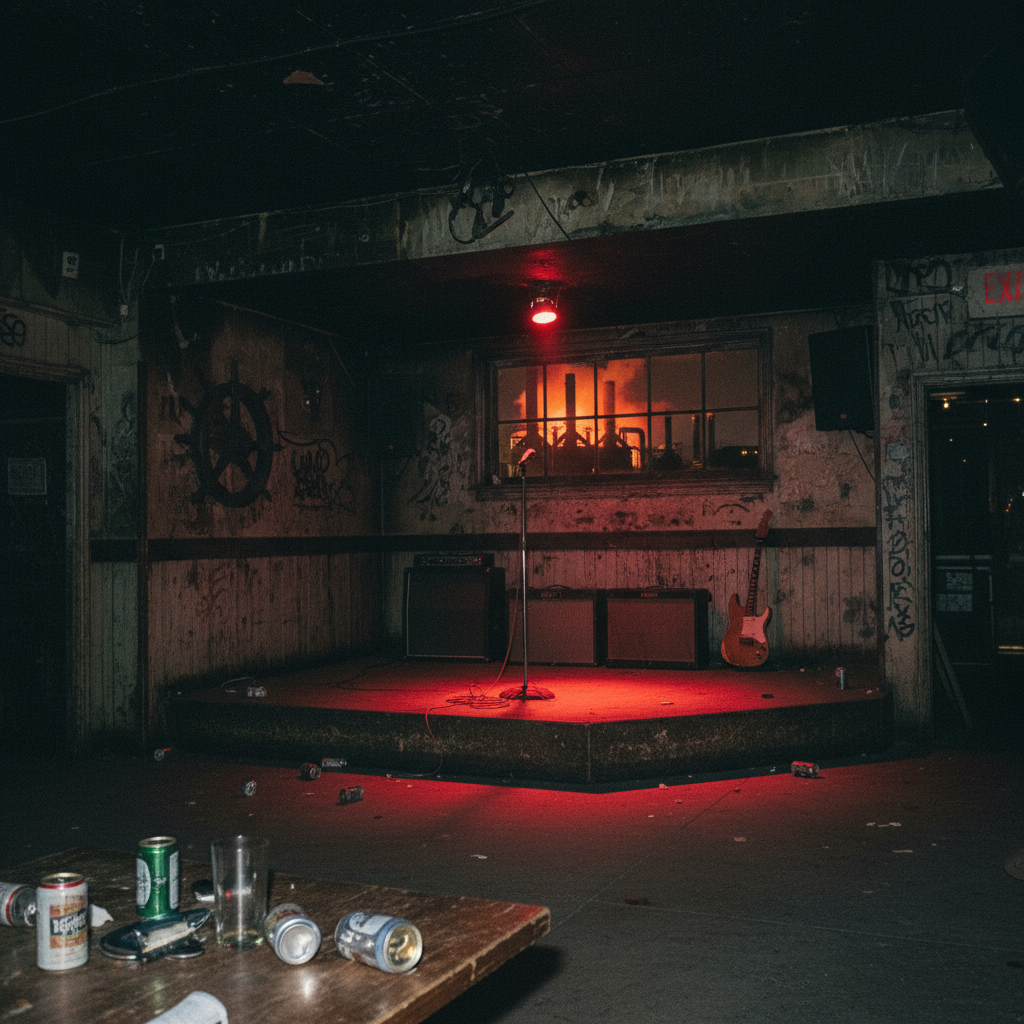 PIRATE'S COVE • EXTERMINATION NIGHT
The conventional history of punk rock goes: New York (CBGB, the Ramones, 1974-76), then London (the Sex Pistols, the Clash, 1976-77). Ohio doesn't appear in this story. The conventional history is wrong.
On November 26, 1977, music journalist Jon Savage coined the term "post-punk" in the British magazine Sounds — and he coined it specifically to describe Ohio bands.
Pere Ubu emerged from Cleveland's industrial decay in 1975. Their single "30 Seconds Over Tokyo" — named after the WWII bombing raid — is credited alongside Television's "Little Johnny Jewel" with signaling the beginning of New Wave. David Thomas's voice, Crocus Behemoth's guitar, and lyrics about factories and parking lots and the empty spaces of the Rust Belt created something genuinely new.
Devo formed in Akron as a direct artistic response to the 1970 Kent State shootings. The killing of four students by the Ohio National Guard radicalized a generation of Ohio artists. Mark Mothersbaugh and Gerald Casale were at Kent State that day. Their concept of "de-evolution" — the idea that humanity was regressing rather than progressing — was born from witnessing their government shoot their classmates.
Cleveland's punk scene — the Electric Eels, Mirrors, the Dead Boys, the Pagans, Rocket from the Tombs — was performing at "Extermination Night" shows at venues like Pirate's Cove years before punk coalesced in New York or London. The cultural context was essential: Cleveland in the 1970s was nicknamed "Bomb City U.S.A." due to organized crime car bombings and economic collapse. The Cuyahoga River had literally caught fire in 1969. The city was dying. The music sounded like it.
And before all of this, there was the event that started rock and roll itself. The Moondog Coronation Ball on March 21, 1952, at Cleveland Arena, organized by DJ Alan Freed and record store owner Leo Mintz, is recognized by Guinness as the world's first major rock and roll concert. Twenty thousand people tried to enter a 10,000-capacity arena. The show was shut down before the first act finished. The police were called. Rock and roll began the way it meant to go on.
The Atomic Bomb's Trigger Was Built in an Ohio Tennis Court
Oakwood, Dayton • The Dayton Project • 1943–1945
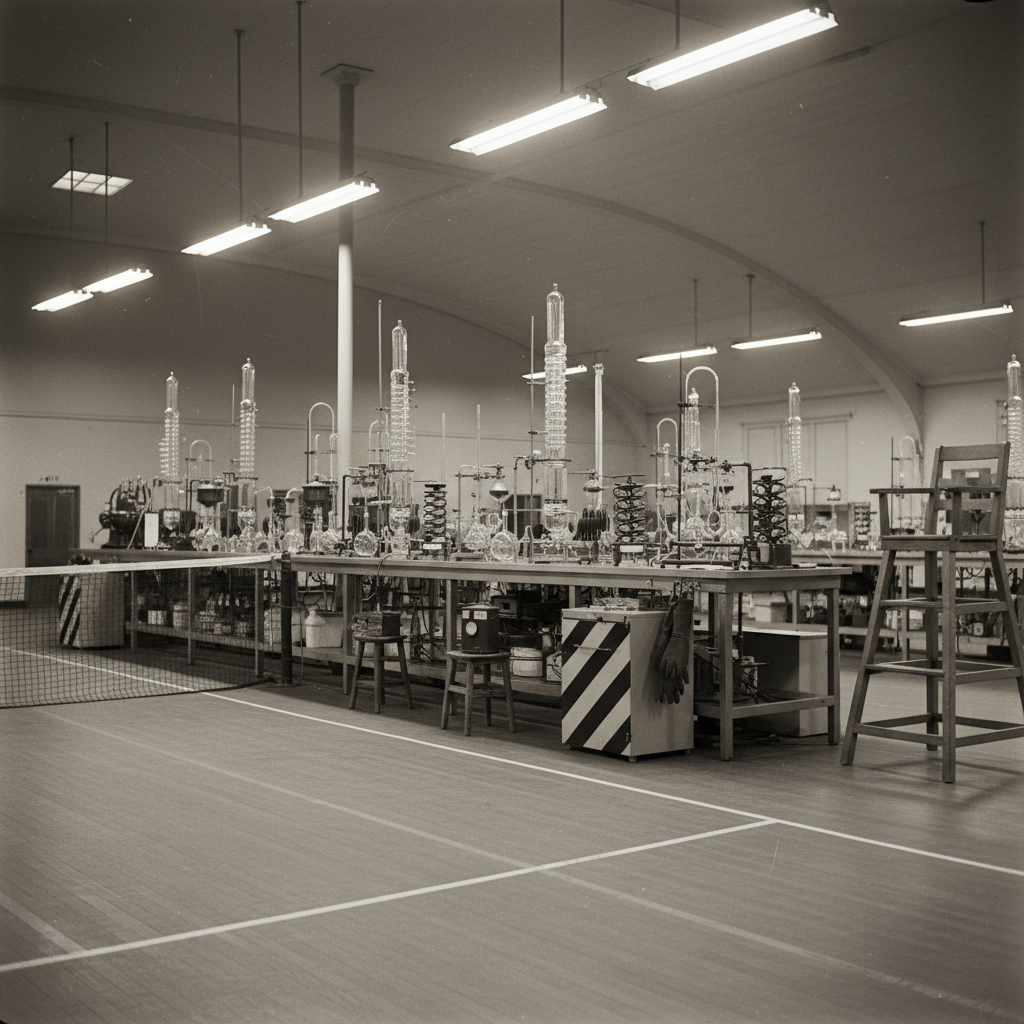 UNIT IV • CLASSIFIED • 1944
In 1943, the U.S. government tasked Monsanto Chemical Company with developing polonium-based neutron initiators — the triggers for the atomic bombs — in a covert operation called the Dayton Project. Dr. Charles Allen Thomas, Monsanto's research director, was asked to become co-director of Los Alamos alongside Oppenheimer. He chose to stay in Dayton.
The secret facilities were hidden in plain sight. Unit III occupied the former Bonebrake Theological Seminary at 1601 W. First Street. Unit IV was the Runnymede Playhouse, an elegant indoor tennis court in affluent Oakwood, seized by the War Department in 1944 and converted into a polonium processing plant. Warehouses in residential neighborhoods served as laboratories. The polonium initiators developed in Dayton were used in both Little Boy (Hiroshima) and Fat Man (Nagasaki).
The story gets darker. A Soviet spy named George Koval (codename "Delmar"), serving as a health physics officer in the Army's Special Engineer Detachment, penetrated the Dayton Project and passed polonium secrets to the GRU. Russia's first atomic bomb used an initiator "prepared to the recipe provided by Delmar." Putin posthumously awarded Koval the Hero of the Russian Federation gold star in 2007.
The Runnymede Playhouse became so radioactive it had to be dismantled in 1950 and buried in Tennessee. Post-war, the work moved to the Mound Laboratory in Miamisburg, an underground complex designed to withstand a direct hit from a 2,000-lb bomb. Named after the nearby Miamisburg Indian Mound, it employed over 2,500 workers and produced detonators, tritium, and nuclear batteries for spacecraft until 2003.
Meanwhile, Wright-Patterson Air Force Base housed Project Blue Book (1951–1969), the Air Force's official UFO investigation, and remains central to the "Hangar 18" conspiracy. The Air Force insists: "There are not now, nor have there ever been, any extraterrestrial visitors or equipment on Wright-Patterson Air Force Base." The base does, however, contain buildings 18A through 18G.
Eight Presidents (and Why)
Ohio has produced eight U.S. presidents — more than any state except Virginia. The conventional explanation is "Ohio is patriotic." The real explanation is more interesting: Ohio was the 19th century's swing state.
In the post-Civil War era, party bosses selected presidential nominees in backroom deals. They calculated that an Ohioan maximized their chances: Ohio was geographically central, not too far north or south, east or west. It was the third most populous state for much of the 1800s. Most Ohio presidents were Union Civil War veterans (Grant, Hayes, Garfield, Harrison, McKinley), and military credentials were powerful political capital.
Historian James Melcher argues that Ohio's brand of moderate, even "bland" politics actually played better when insiders chose nominees. The modern primary system rewards candidates who fire up the base. Ohio's style — competent, moderate, unremarkable — doesn't thrive in that system. Ohio hasn't produced a president since Warren G. Harding in 1920.
The eight: William Henry Harrison, Ulysses S. Grant, Rutherford B. Hayes, James A. Garfield, Benjamin Harrison, William McKinley, William Howard Taft (also the only person to serve as both President and Chief Justice), and Warren G. Harding.
25+ Astronauts: What Are They Running From?
 OHIO → ORBIT
There's a famous joke: "What is it about Ohio that makes people want to leave Earth?" The state has produced more than 25 astronauts, including John Glenn (first American in orbit), Neil Armstrong (first person on the Moon), and Judith Resnik (who died in the Challenger disaster).
The real answer is infrastructure. Ohio hosts NASA Glenn Research Center in Cleveland (above those twelve square miles of salt mines), Wright-Patterson Air Force Base near Dayton, and the Neil Armstrong Test Facility in Sandusky. The Wright Brothers built their flying machines in Dayton, creating a deep cultural connection to aviation and aerospace. Once Glenn and Armstrong became heroes, being an astronaut became, as one historian put it, "not an inconceivable dream for young Ohioans."
The joke is funny, though. Ohio leans into it.
The Toledo War: America's Most Absurd Conflict
The Ohio-Michigan Border • 1835–1836
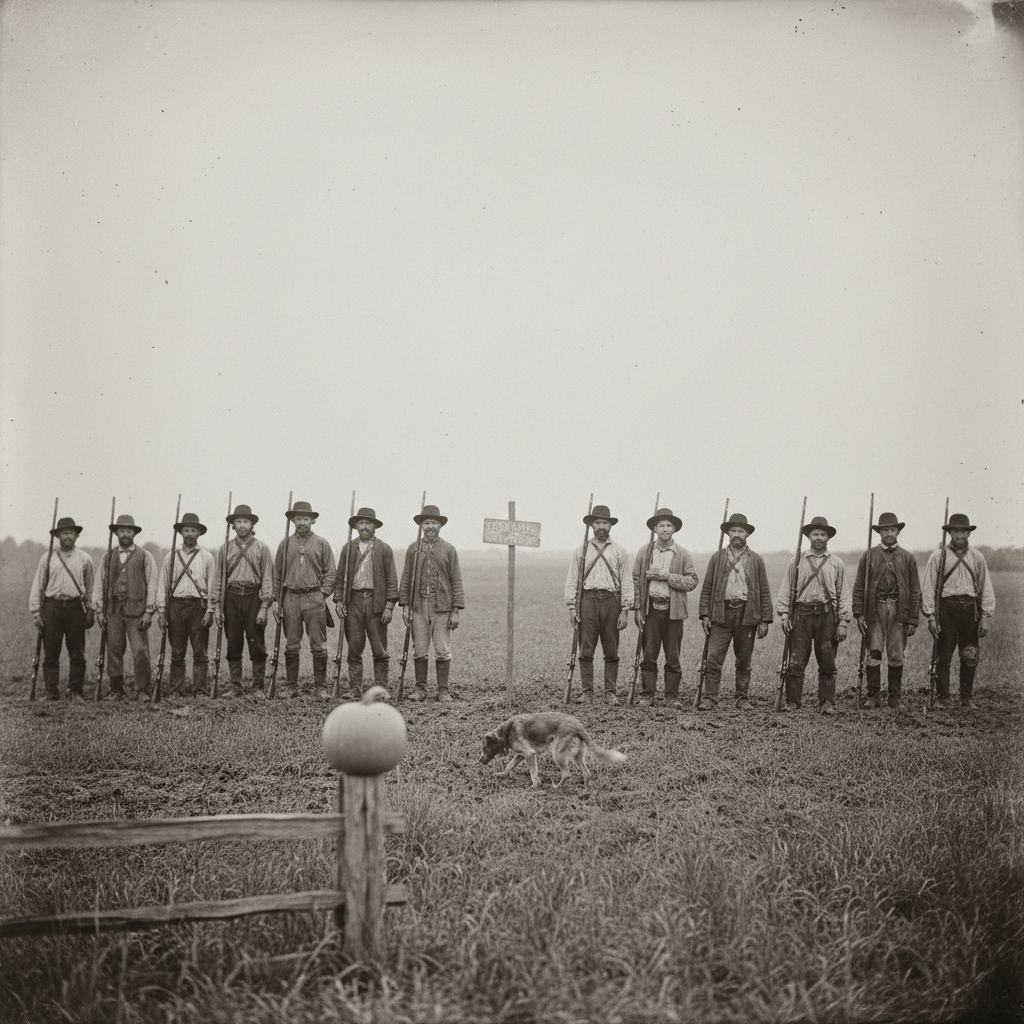 OH-MI BORDER • 1835
Ohio and Michigan Territory nearly went to war over a 468-square-mile strip of land containing present-day Toledo. Michigan's 23-year-old "Boy Governor" Stevens T. Mason mobilized 1,000 armed militiamen. Ohio mobilized its own troops. Two armies faced each other across a disputed boundary.
The war's only casualty came when Two Stickney — yes, his actual name; his father Benjamin named his sons One and Two — stabbed Michigan Deputy Sheriff Joseph Wood with a penknife, reportedly saying "Damn you, you have got it." Wood survived.
Ohio also held a secret midnight court session in Toledo, sneaking in judges before Michigan forces could arrive, to establish jurisdiction. President Jackson sided with Ohio (a state with 19 electoral votes) and gave Michigan the Upper Peninsula as a "consolation prize" for statehood — which turned out to contain enormous copper, iron, and timber deposits worth far more than Toledo. The University of Michigan once owned 900 acres in downtown Toledo for a potential campus. After losing the war, they sold the land and built in Ann Arbor.
Ohio Invented Everything and Nobody Noticed
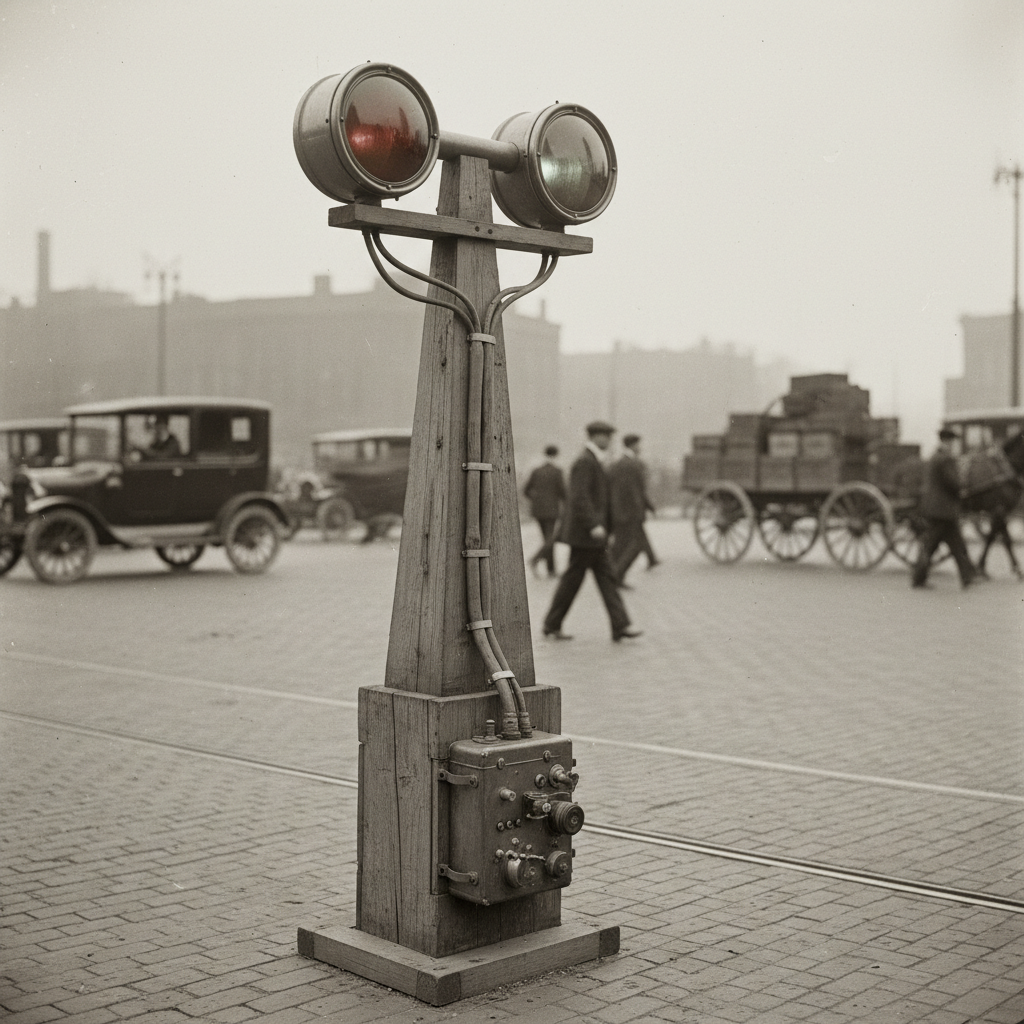 EUCLID & 105TH • 1914
The list of things invented or pioneered in Ohio is genuinely absurd in its breadth:
- The Cash Register (1879): James Ritty, a Dayton saloon owner tired of employee theft, built the "Incorruptible Cashier." It became NCR.
- The Traffic Light (1914): Cleveland installed the world's first electric traffic light. Garrett Morgan later patented the three-position signal, adding the "all-stop" interval (the yellow light concept), and sold the patent to GE for $40,000.
- PVC (1926): Accidentally invented by Dr. Waldo Semon at B.F. Goodrich in Akron. Now: 40 million tons produced worldwide annually.
- The Pop-Top Can (1959): Ermal Fraze of Kettering forgot his church key at a picnic, used his car's fin to open a beer, then invented the pull-tab.
- The Portable Vacuum Cleaner (1908): Canton janitor James Spangler's persistent cough from sweeping drove him to build a better way.
- America's First Gas Car (1891): John Lambert built it in Ohio City — and reportedly got into the world's first car accident.
- The Civilian Ambulance (~1865): Cincinnati's Commercial Hospital established the first service, predating New York's by 3-4 years. The driver earned $360/year.
- Life Savers (1912): Clarence Crane's chocolate kept melting. He spotted a pill machine and made ring-shaped mints. Sold the formula for $2,900.
- Cheez-Its (1921): Evolved from a hard butter cracker created by an 1847 Dayton doctor for patients with dietary restrictions.
Granville T. Woods, born in Columbus in 1856, earned over 60 patents for electrical and mechanical devices. Edison tried to claim his telegraph innovations in court — and lost. Edison offered Woods a job. Woods declined. Charles Kettering of Ashland County invented the electric automobile self-starter, co-invented Freon, invented leaded gasoline, and held 186 patents.
The Underground Railroad's Greatest Network
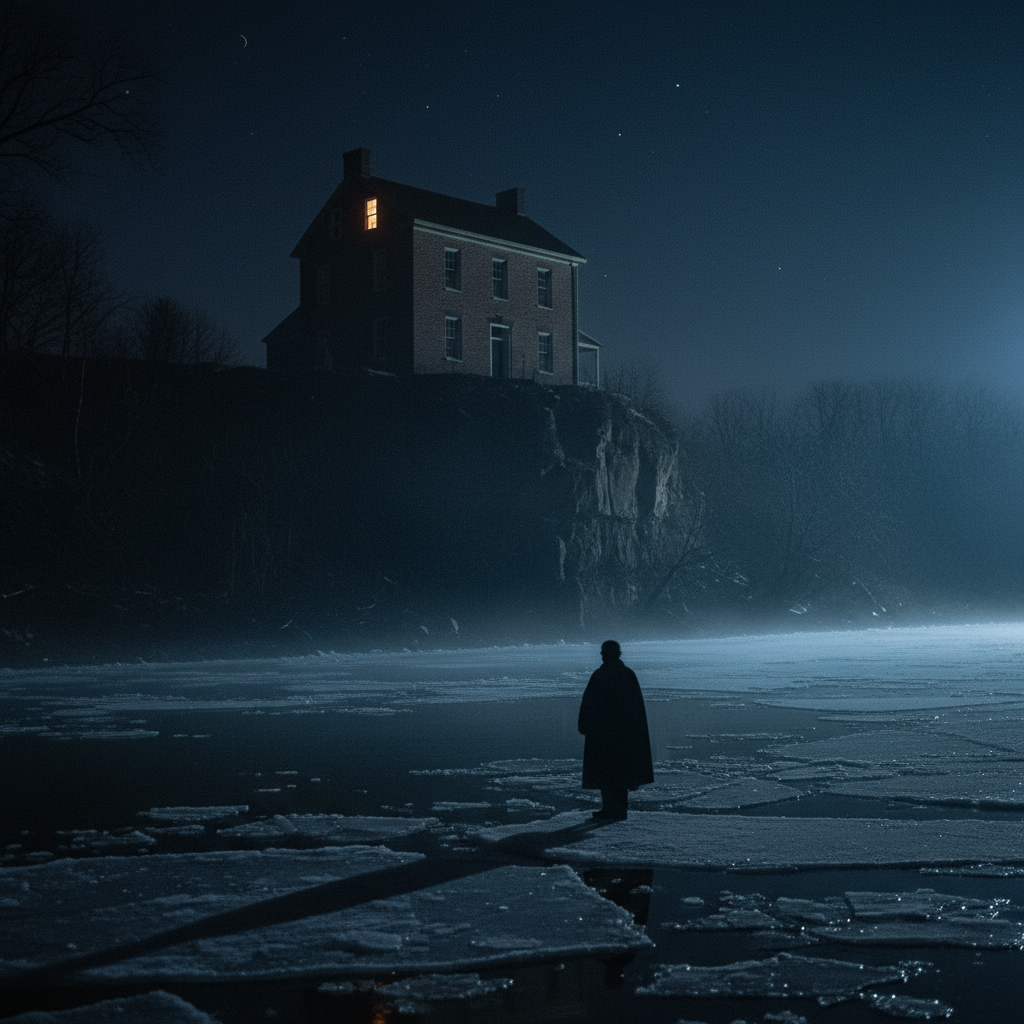 RIPLEY • LANTERN IN THE ATTIC
Ohio had the most extensive Underground Railroad network of any state — approximately 3,000 miles of routes with 20+ entry points on the Ohio River and roughly 10 exit points along Lake Erie. Nearly 1,500 of the nation's 3,200 known voluntary railroad workers — almost 50% — operated in Ohio.
In Ripley, John Parker, a formerly enslaved man who purchased his own freedom, became one of the most daring conductors. He didn't wait for freedom seekers to reach Ohio — he personally crossed into Kentucky to find and rescue them, risking re-enslavement and death with every trip.
In the same town, Reverend John Rankin placed a lantern in his attic window overlooking the Ohio River as a signal to freedom seekers that safety lay on the other side. The image of a freedom seeker crossing the river on ice floes, guided by the distant light of the Rankin house, inspired the famous scene in Uncle Tom's Cabin. Over 40 years, the Rankin family helped more than 2,000 people escape.
Oberlin was probably the safest community in Ohio for runaways. The record speaks for itself: no fugitive slave in Oberlin was ever returned to bondage. The town housed Oberlin College, the first U.S. school to admit women and Black students.
The Newark Earthworks: A Golf Course Built on Sacred Ground
Licking County • UNESCO World Heritage Site (2023)
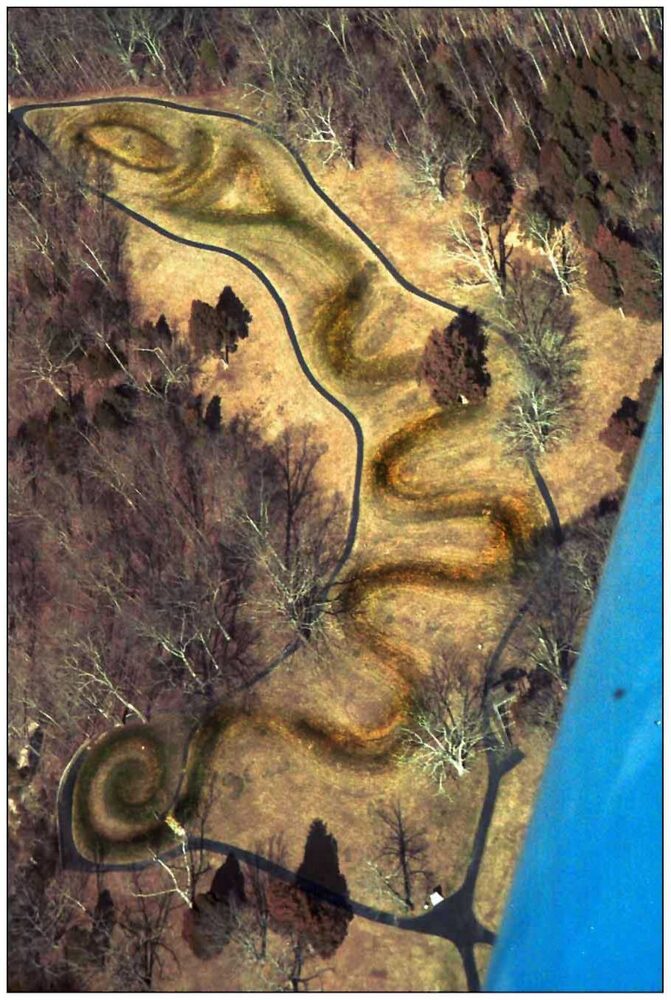 SACRED GROUND
The Newark Earthworks in Licking County are 2,000-year-old Hopewell geometric enclosures constituting the largest series of geometric earthworks in the world. The octagon and circle enclosures chart the 18.6-year lunar nodal cycle with near-perfect precision — an astronomical achievement that demonstrates sophisticated mathematical and observational knowledge.
For the past century, the site was leased to the Moundbuilders Country Club — an 18-hole golf course built on one of the most significant archaeological sites on the planet. When Eastern Shawnee Chief Glenna Wallace first visited in 2007, golfers shouted "Get back! You're in the way!"
The site received UNESCO World Heritage designation in 2023. The country club lease has been ended, and the earthworks are being returned to public access and proper stewardship.
In Cuyahoga Valley National Park, the Botzum Mound — a 2,000-year-old Hopewell burial mound — is unlisted on any park map. If you ask a ranger where it is, they'll tell you: "We can't help you with that."
The Literary State
 LORAIN • FEB 18 • MORRISON DAY
Toni Morrison was born Chloe Ardelia Wofford in Lorain in 1931. The Bluest Eye is set in Lorain; Beloved is set in slave-era Cincinnati, inspired by the real 1856 case of Margaret Garner, who fled across the Ohio River. February 18 is officially Toni Morrison Day in Ohio.
Sherwood Anderson's Winesburg, Ohio (1919), based on Clyde, Ohio, influenced Hemingway, Faulkner, and Steinbeck. Donald Ray Pollock's debut collection is literally named Knockemstiff after his Ross County hamlet. And Ready Player One is set partly in a dystopian future Columbus.
Paul Laurence Dunbar of Dayton was among the first African American authors to achieve national prominence. James Thurber of Columbus wrote for The New Yorker and became one of America's most celebrated humorists. Erma Bombeck of Dayton brought suburban humor to millions of newspaper readers. The state's literary output, like everything else about Ohio, is larger and more significant than its reputation suggests.
"Ohio's greatest trick may be convincing America it's boring. The evidence overwhelmingly contradicts this."