The Subway to Nowhere
Cincinnati • 2.2 miles of tunnels • Zero passengers, ever
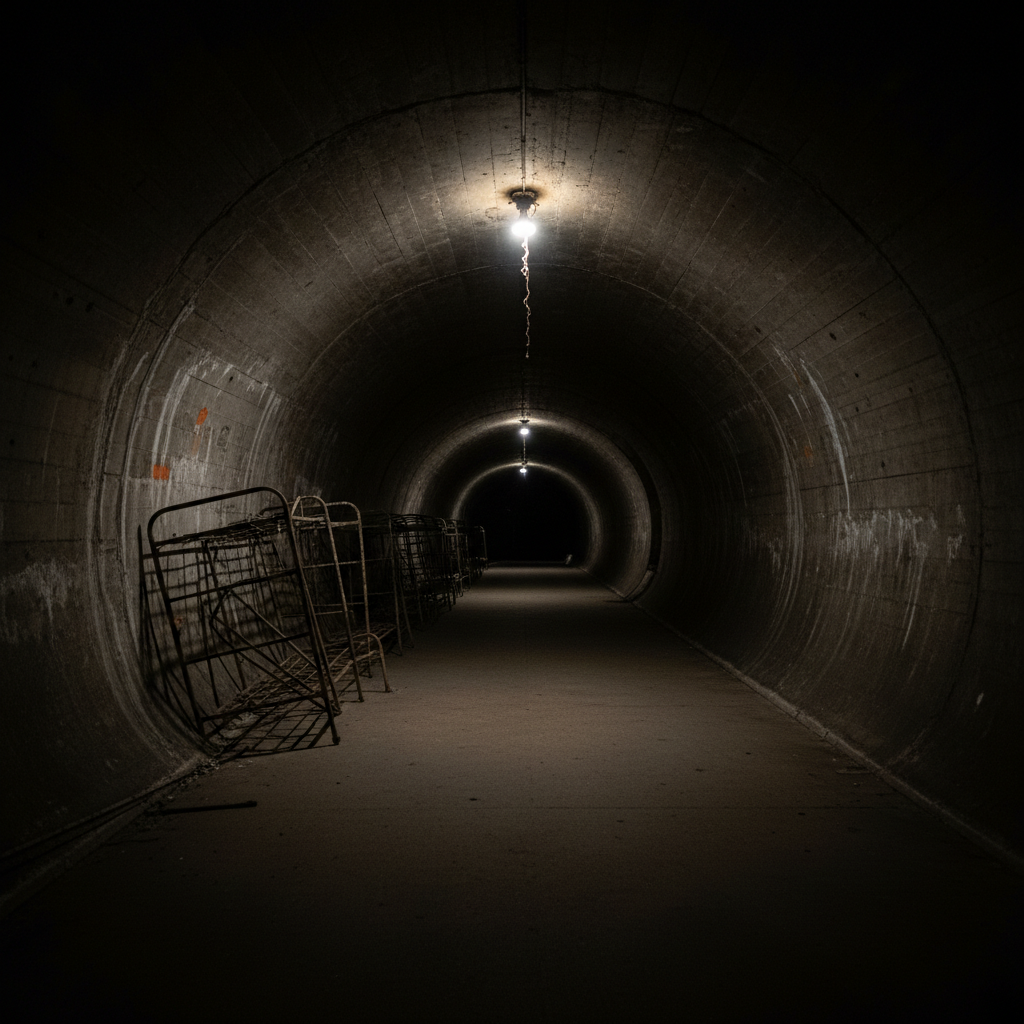 CENTRAL PARKWAY • SEALED 1925
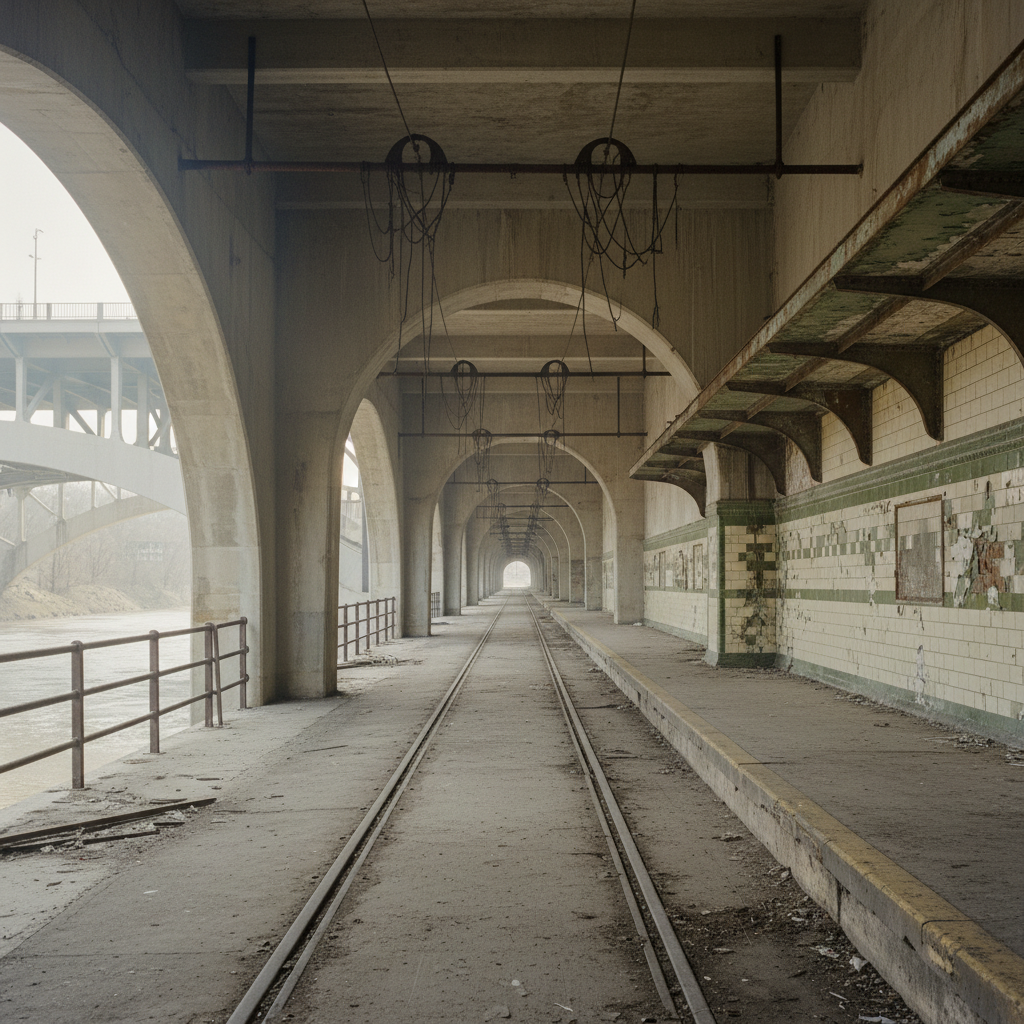
Cincinnati houses the largest abandoned subway tunnel system in the United States — 2.2 miles of fully constructed tunnels running under Central Parkway that have never transported a single rider. Not one. In over a hundred years.
In 1916, Cincinnati voters approved a $6 million bond by over 80% to build a subway system. The city was growing. The streetcar system was overcrowded. A subway seemed like the obvious next step. Construction began in 1920, and by 1923, the tunnels were complete — bored through bedrock, lined with concrete, stations roughed in.
Then the money ran out. World War I inflation had devoured the budget. The $6 million that was supposed to build the entire system had only been enough for the tunnels themselves. No tracks were ever laid. No rolling stock was ever purchased. No electrical systems were ever installed. The city had built a subway-shaped hole and filled it with nothing.
The stock market crash of 1929 buried any remaining hope of completing the system. But the failed revival attempts are where the story becomes genuinely surreal:
- 1936: Engineers proposed routing trolleys through the tunnels. The streetcars were too long for the curves.
- 1939: Someone suggested converting the tunnels for automobile traffic. Too expensive to ventilate.
- World War II: The tunnels were proposed as air raid shelters. Old bunk beds were installed and remain to this day.
- 1960s: One station was converted into a Cold War nuclear fallout shelter, complete with decontamination showers and barrels of MREs.
- The Diocese of Southern Ohio wanted to hold candlelight communion services for 500 people. They couldn't get insurance.
- 1974: A group proposed converting the tunnels into an underground shopping district.
- Meier's Winery wanted to build an underground wine tourist attraction.
- 2002: A rail transit proposal was put to voters and defeated two-to-one.
The tunnels remain. They are continuously maintained — not because anyone plans to use them, but because Central Parkway sits directly on top of them, and structural neglect would compromise the road. City workers descend periodically to check for water damage and structural integrity. Occasional public tours are offered, and they sell out almost instantly. It is one of the most extraordinary pieces of municipal infrastructure in America — a monument to ambition, inflation, and the gap between what a city dreams and what it can afford.
Twelve Square Miles of Salt Under Lake Erie
Cleveland • 1,800 feet underground • Accessed from Whiskey Island
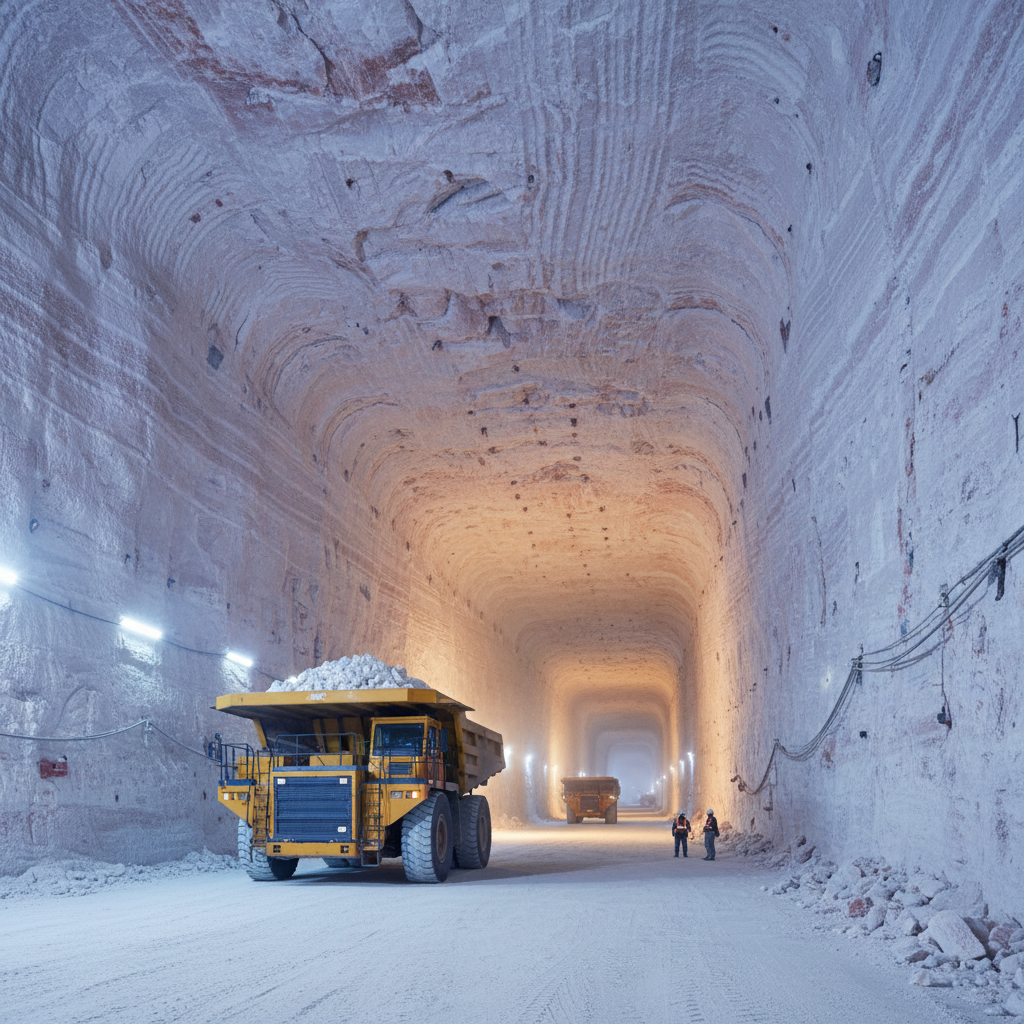 CARGILL • 1,800 FT BELOW LAKE ERIE
Cargill operates one of the world's largest salt mines directly beneath Lake Erie — twelve square miles of caverns, accessed from Whiskey Island, which sits next to downtown Cleveland. The mine entrance is less than two miles from Progressive Field, where the Guardians play baseball.
The salt formed from an ancient inland sea 440 million years ago, long before anything resembling Ohio existed. The deposits are massive and consistent, and the mine produces three to four million tons of rock salt annually, primarily used for road de-icing across the Midwest.
At 1,800 feet deep, the mine is one of the deepest active salt mines in North America. Workers descend in an elevator that takes several minutes to reach the bottom. The temperature underground is a constant 55°F year-round. The caverns are tall enough to drive trucks through, and the operation runs 24 hours a day during the winter salt season.
Above the mine, Lake Erie goes about its business. Ships cross overhead. Fish swim. The fact that one of the Great Lakes is undermined by twelve square miles of excavated tunnels is the kind of fact that, once you learn it, makes you slightly nervous every time you look at the Cleveland waterfront.
The World's Largest Geode
Put-in-Bay, South Bass Island
 CRYSTAL CAVE • PUT-IN-BAY
Beneath a winery on South Bass Island sits a geological wonder that defies expectation. Crystal Cave was discovered in 1897 by German immigrant Gustav Heineman while digging a well. At 30 feet depth, his shovel broke through into a void.
The cave he found is the world's largest known geode. Its walls are entirely lined with celestite crystals — some up to three feet wide and weighing 200 to 300 pounds. The crystals are estimated to be 12,000 to 15,000 years old, formed when mineral-rich water slowly deposited strontium sulfate crystals inside a natural void in the limestone bedrock.
Heineman originally mined strontium from the crystals for use in red fireworks, but quickly realized that the cave itself was more valuable as a tourist attraction than the minerals he could extract from it. During Prohibition, when his winery couldn't legally sell wine, tour revenues from Crystal Cave kept the business alive. The winery survived; the cave was preserved; and today, visitors to Put-in-Bay can descend into one of the most remarkable geological formations in North America for the price of a winery tour.
Moonville: The Ghost Town That Haunts Its Own Tunnel
Vinton County • Founded 1856 • Dissolved ~1947
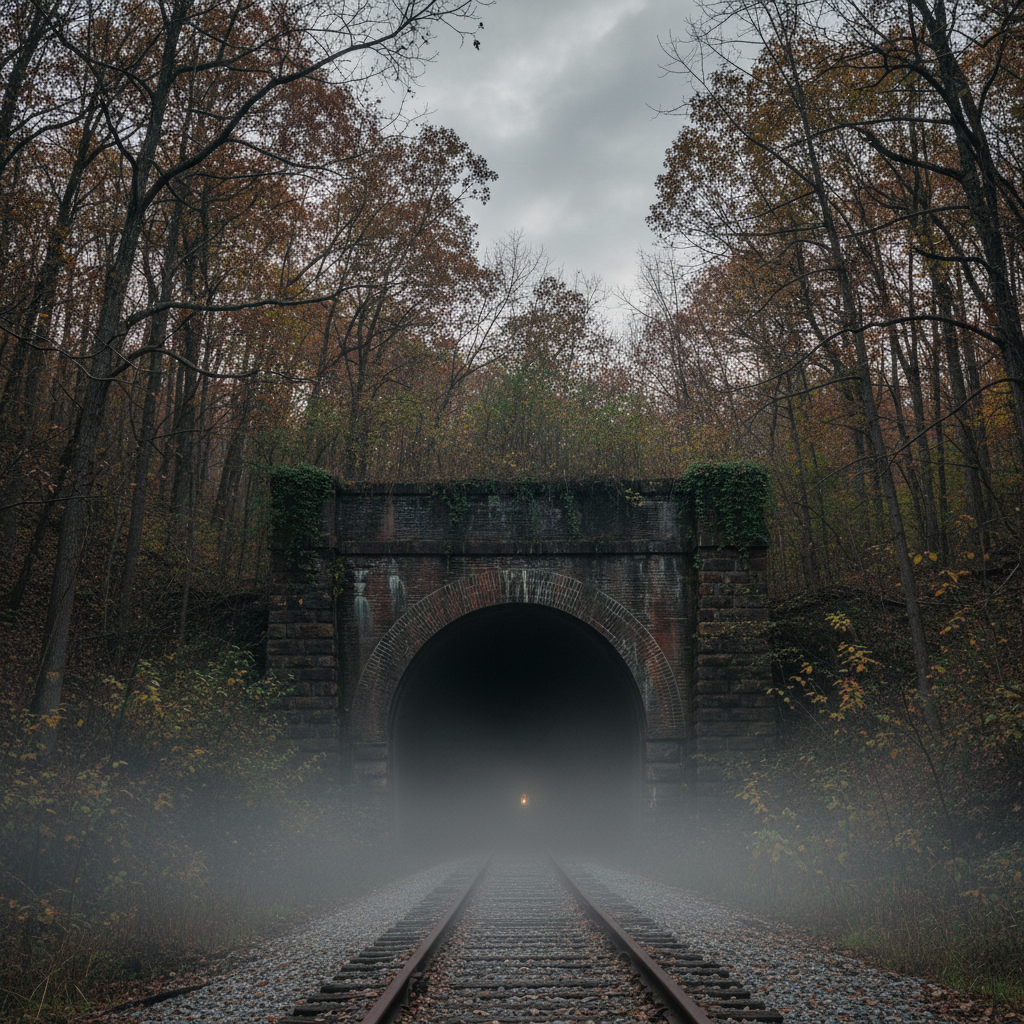 VINTON COUNTY • 26 DEATHS RECORDED
Moonville was a coal mining and railroad town in the deep forests of Vinton County, one of Ohio's most remote and sparsely populated areas. At its peak, it had a few hundred residents, a post office, and a 160-foot brick railroad tunnel. By 1947, the coal was gone, the jobs were gone, and Moonville was gone too.
But the ghosts, allegedly, are not.
The Moonville Tunnel has spawned four distinct ghost legends, each tied to a real death on the tracks. At least 26 deaths are documented in and around the tunnel — a horrific toll for such a small settlement, driven by the combination of tight curves, poor sightlines, and the alcohol consumption typical of isolated mining towns.
The most famous ghost is a figure carrying a lantern who walks the tracks inside the tunnel. Engineers on passing trains reported seeing the apparition so frequently that in 1981, the railroad installed a signal light at the tunnel entrance — not for any practical purpose, but because engineers kept emergency-braking when they saw the phantom lantern-swinger. The false stops were expensive and dangerous. A signal light was cheaper than the alternative.
The tunnel still stands, accessible via a hiking trail through the forest. It is one of the most atmospheric places in Ohio — a dark brick tube in the middle of dense woods, far from any town, where the loudest sound is usually the drip of groundwater from the ceiling.
The Town That Was Bought and Erased
Cheshire, Gallia County • Population: ~200 • Purchased: 2002
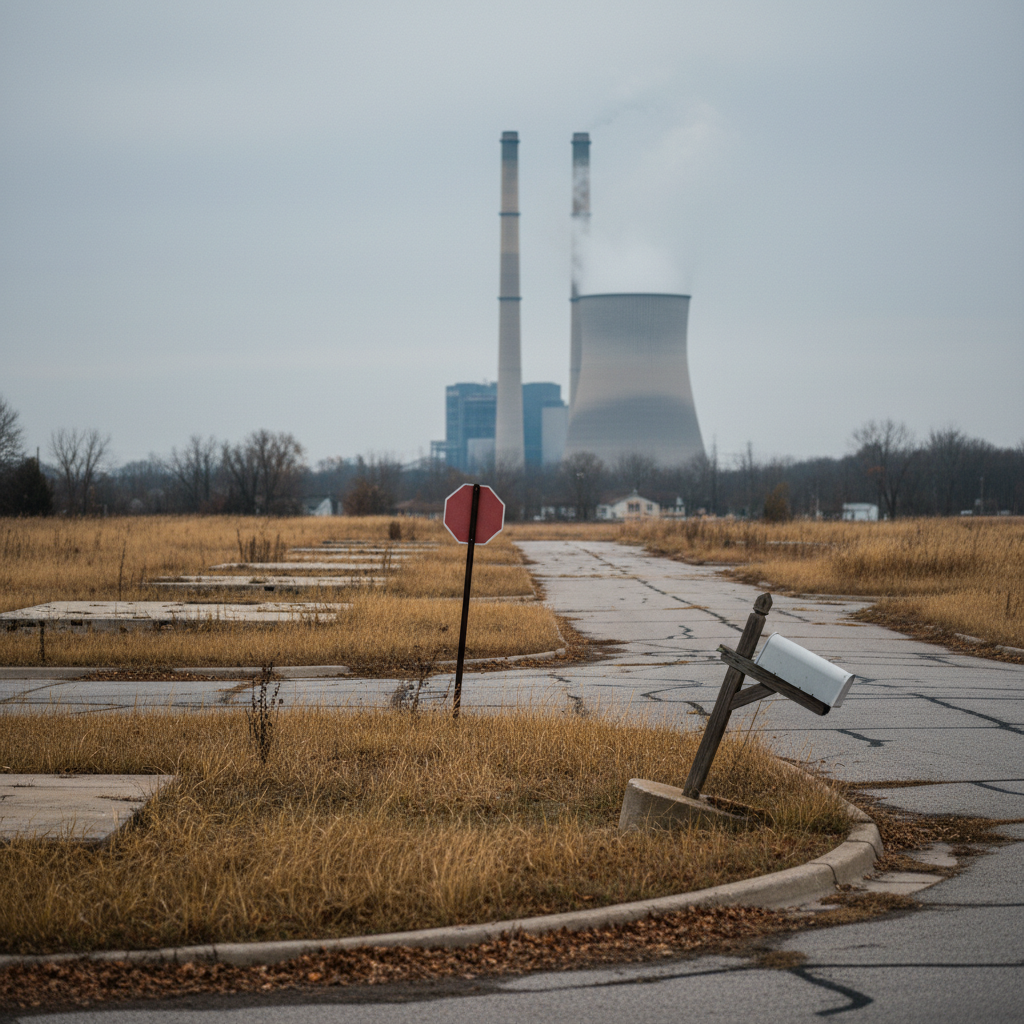 CHESHIRE • ACQUIRED 2002 • $20M
Cheshire was a small village in Gallia County, situated next to the James M. Gavin Power Plant, a massive coal-fired facility operated by American Electric Power. For years, residents complained about the plant's emissions — a blue-gray haze that settled over the town, a sulfuric smell that lingered in clothing and hair, health problems that seemed to cluster unnaturally.
In 2002, rather than address the pollution, AEP did something extraordinary: it bought the entire town for $20 million. Every house, every lot, every building. Residents were offered buyouts. Most accepted. The town of Cheshire effectively ceased to exist — purchased and vacated by the company that had destroyed its air and poisoned its groundwater.
A handful of residents refused to sell and remain. The power plant still operates. The empty lots where houses once stood have been absorbed by grass and weeds.
Ohio's Abandoned Amusement Parks
 CHIPPEWA LAKE • CLOSED 1978
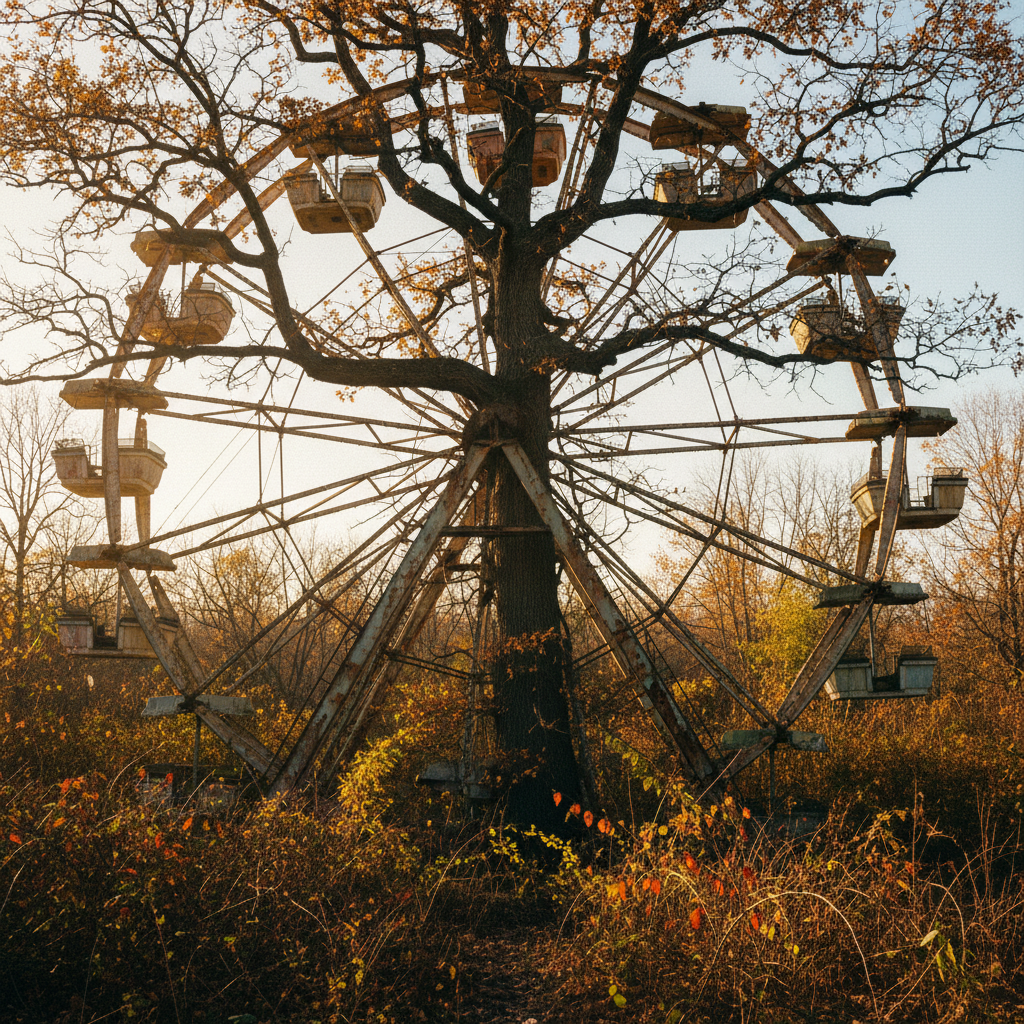
Chippewa Lake Park in Medina County operated for exactly 100 years — from 1878 to 1978. When it closed, it was simply left. No demolition. No salvage. The rides stood in the woods as the forest slowly reclaimed them. For three decades, the park sat in a state of arrested decay, becoming one of the most photographed abandoned places in America. Its most iconic image: a Ferris wheel with an enormous tree growing through its center, branches threading between the spokes as if the forest had decided to ride.
And in Hamilton, Stricker's Grove remains Ohio's best-kept amusement secret: a private park open to the public only four times per year. What makes it extraordinary is the roller coaster. Owner Ralph Stricker built his own wooden roller coaster from 1990 to 1993 — the only person in the United States to build his own coaster. He designed it, sourced the lumber, and constructed it by hand. It still operates.
"The tunnels remain, continuously maintained — not because anyone plans to use them, but because Central Parkway sits directly on top of them, and structural neglect would compromise the road."